
— John Burt, Highland 11th Ward
I wrote this essay in my later years of high school, recounting a family history experience from a few years before. For me, the experience was life-changing, so I thought I’d share it here.
A trip to the city cemetery? Sounded boring. I could think of several things that a young teenager could be doing other than visiting an old graveyard, especially since it was raining and getting colder outside by the minute. But my parents were insistent, so I decided not to put up a fight. My grandmother, who accompanied us on our long drive to the cemetery, seemed especially eager to visit the graves of our ancestors.
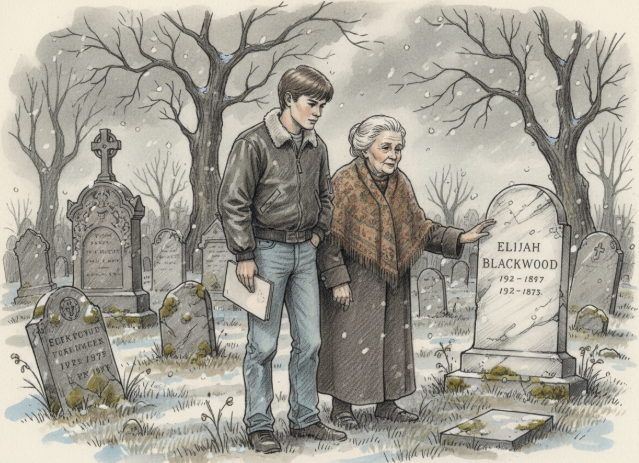
As we pulled into the cemetery and slowly drove up a narrow, side street, I couldn’t help noticing that we were the only ones there. My grandmother was intently studying the gravestones for some familiar monument that she might remember. Pretty soon, she tapped on the window and pointed, saying “I believe our family plot is over there.”
Dad pulled the car to the side, we all clambered out of the car, and I followed Grandma over to a group of headstones that looked to be over a hundred years old. Then, she began to tell a little about each person whose name was inscribed on the headstone. As she continued to walk from gravestone to gravestone, I began to see how much these people had meant to her. She spoke of each ancestor with quiet reverence and love, always describing some of the good deeds that were attributed to each person.
By now it had become much colder, and I soon noticed snowflakes replacing raindrops in the cold, winter sky. A sense of loneliness came over me as I looked to the tallest of the monuments, belonging to my great-great grandparents. Day after day, year after year these gravestones had stood, each representing a different person, a different history, and a different path that led them here to their final resting place.
The snow began to cover the ground in a thin layer, and the wind blew stronger, compelling each of us to pull our coats even tighter. Mom suggested we get going, but for some reason, I didn’t want to leave. I felt a need to be near my progenitors whom, until then, I had nearly forgotten.
I had suddenly realized that we might not be coming back here for a long time. I thought to myself how lonely it would be in a cemetery if no one came to visit. I walked up to a grave, marked with a flat stone lying flush with the ground, and brushed the snow off the inscription. “Beloved Mother” it read, and it was then that I saw a real person behind those words. I saw a mother who worked hard in making a home for her family, giving her time and energy to her children so that someone like me might come along and recognize that the principles and traditions she taught her children had shaped my life, too. I felt ashamed that only an hour before I had wanted to skip this visit. As we walked silently back to the car, I felt the coldness of death in the air. I saw time covering the memories of these ambitious, lively, faithful pioneers like the powdery snow that covered their names etched in the headstones.
I sensed that my grandmother had the same thoughts I did as she reluctantly got back into the car. I then made a solemn process to myself that I would try to preserve the memory of my grandmother and not let time cover her life as it did so many others.
As the car roared to life and we pulled away from our family plot, I peered out the rear window and watched the headstones recede in the distance. As the flurried snowfall finally obscured my vision, I turned around and caught my grandmother’s eye, long enough to give her a reassuring smile.